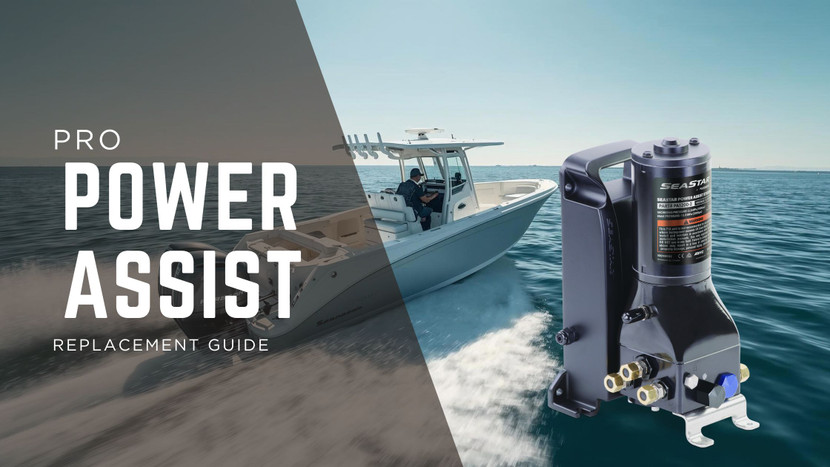
SeaStar PRO Power Assist Replacement Guide
Dometic SeaStar Power Assist Update: The New -3 Series (PA1200-3 and PA1200-3HP)
Dometic updated the SeaStar Power Assist line with the -3 series, streamlining older part numbers and replacing discontinued models (including the popular PA1315-2 Power Assist PRO). If you are maintaining an existing SeaStar steering system, building a new install, or simply looking for lighter, more comfortable steering under load, this guide explains what changed and how to choose the right replacement.
What Is SeaStar Power Assist?
SeaStar Power Assist (P/A) is an electronically controlled gear pump installed in the hydraulic steering circuit between the helm and the steering cylinder(s). The helm remains the control element (direction and command), and the power assist adds hydraulic power to reduce steering effort. The faster you turn the wheel, the faster the assist pump runs. When you are not steering, the unit stops and draws standby power only.
What Changed With the -3 Series?
- Updated electronics and performance: The -3 series is a current-generation platform intended to replace prior variants.
- ORB fittings: The -3 series uses ORB-style fittings consistent with modern SeaStar steering components.
- Model consolidation: Older standard models and discontinued PRO/Pilot variants were consolidated into current replacements.
Part Number Cross Reference: -2 Series to -3 Series
| Older Part # | Description | New Part # |
|---|---|---|
| PA1200-2 | SeaStar Power Assist, 15 ft | PA1200-3 |
| PA1200-2HP | SeaStar Power Assist, 15 ft (HP) | PA1200-3HP |
| PA1225-2 | SeaStar Power Assist, 25 ft | PA1225-3 |
Discontinued Models and Their Replacements
| Discontinued Part # | Description | Replacement |
|---|---|---|
| PA1315-2 | SeaStar Power Assist PRO, 15 ft | PA1200-3 (consider PA1200-3HP for high steering loads) |
How the New -3 Series Replaces the PRO (PA1315-2)
The discontinued PRO unit is replaced by the current -3 series platform. In the field, one key difference many installers noted is that the legacy PRO did not include a lockspool and could provide variable steering effort. The current -3 family is the supported replacement, and the -3HP variant is the go-to option when steering loads are higher and you want the assist to hold strong under load.
Choosing Between PA1200-3 and PA1200-3HP when Replacing a PA1315-2
- PA1200-3 (Standard): Best choice for typical steering loads on SeaStar and SeaStar PRO systems. If your steering effort is reasonable today but you want lighter, easier wheel feel, the standard unit is usually ideal.
- PA1200-3HP (High Pressure): Best choice when steering loads are consistently high. Common examples include some dual-prop gearcases (often referenced with Suzuki dual-prop setups) and other high-torque/high-load applications: heavier boats, aggressive trim angles, higher-speed operation, multi-engine rigs, and setups where steering can feel heavy under load.
Tip: If you can turn the wheel faster than the assist can pump and you feel effort rise, you are at the system’s maximum assist rate. That is a strong indicator you should consider the higher-capability option for your load profile.
Need Help Choosing?
- Use our Tech Support Page Here. Contact Dometic's dedicated tech support team.
Compatibility and Key Warnings (Read Before You Buy)
- Helms: Compatible with SeaStar and SeaStar PRO helms. For optimal performance, 1.4, 1.7, and 2.0 helm pumps are commonly recommended.
- Hoses: Use SeaStar or SeaStar PRO hydraulic hoses. Nylon tube is not used for the main steering lines (it may be used for the compensating line only).
- Cylinders: Compatible with SeaStar cylinders in the supported categories (outboards, many inboard/stern drive cylinders except power steering cylinders).
- Do not use with BayStar cylinders: Power assist can generate pressures that can damage BayStar support rods.
- Use only approved fluids: The PA1200-3HP uses HA5482 EPS Fluid.
Installation Notes That Prevent Headaches
Installation Tips
- Do not run the unit until the system is fully bled: The steering system must be purged of air before powering the assist.
- Mounting: Mount in a dry location and keep the unit within about 10 degrees of vertical to help air purge correctly.
- Magnetic considerations: Keep the power assist at least 24 inches from a magnetic compass, and avoid mounting near strong magnetic-field sources like electric motors.
- Fittings: Use ORB fittings as intended - do not force NPT fittings into ORB ports.
Space-Constrained Installs (90 Degree Fittings)
- If the hose bend radius is tight near a bulkhead, a 90 degree ORB fitting kit HF6004 can replace the straight pump output fittings (C1/C2). (Use 90 degree fittings on the output side only.)
- Caution: Do not use NPT fittings on the power assist unit. Using NPT fittings can damage the unit.
Maintenance Guidelines
- Before each trip: Check helm fluid level, verify immediate response lock-to-lock, and inspect hoses/fittings for wear, kinks, chafe, or leaks.
- Ongoing: Perform a thorough inspection every 2 months or 20 operating hours (whichever comes first), and after any steering service.
FAQs
- Can I use the power assist with an autopilot? Yes - it can be used with hydraulic autopilot systems; use the correct plumbing/connection details for your setup.
- What if the unit loses power? Steering reverts to manual hydraulic operation (higher effort).
- Does a centered steering wheel stay perfectly centered? With hydraulic steering, a perfectly centered spoke may not be maintained due to normal internal hydraulic slip. Many installers prefer an equal-distance spoke wheel for best appearance.
Downloads
Recent Posts
-

Sleipner (Side-Power) Thrusters: The Complete Guide to Bow & Stern Thrusters, Controls, and Installation
Updated: February 2026 The Complete Guide to Sleipner Bow & Stern Thrusters (Side‑Power): Choosing …26th Feb 2026 -
3 Essentials for Upgrading Your Old Engine Controls (Plus a Quick System Selector)
3 Essentials for Upgrading to the NHK MEC KE System (and How to Pick the Right One) If your boat st …17th Feb 2026 -
Keeping Your KE-4a Running: Maintenance, Parts Options, and When to Upgrade
NHK MEC KE-4a Maintenance, Troubleshooting, and Replacement Guide (Upgrade Path to KE-4XG) KE-4a …29th Jan 2026