

Description
Dometic DG3 Gyroscopic Stabilizer: What Boat Owners Should Know
The Dometic DG3 is an active marine gyroscopic stabilizer developed for the 35 to 41 foot recreational boat market. It is designed to reduce side-to-side roll at anchor and underway, with fast stabilization readiness, all-electric precession control and lower power consumption than comparable systems cited by Dometic.
Important dealer and installation notice: SeaTech Marine Products is not a dealer or installer for the Dometic DG3, and we do not sell or install this system. This page is provided for general product research only.
DG3 selection and installation must be handled by qualified, Dometic-trained marine professionals. Use the Dometic dealer map to locate a local dealer or installer, then confirm that the selected location supports DG3 systems.
What the DG3 does
A gyroscopic stabilizer uses a spinning flywheel to create angular momentum. As the vessel rolls, the DG3 senses that motion and controls the angle of the flywheel assembly to generate torque in the opposite direction. The objective is not to stop all vessel movement. It is to reduce the severity and speed of roll so the boat feels calmer and more predictable.
Unlike trim tabs, interceptors or fins, the DG3 is installed completely inside the hull. It does not add an underwater appendage or create external drag. It can provide roll reduction while drifting or anchored as well as while underway.
What makes the DG3 active?
Dometic describes the DG3 as the first truly active gyro for the recreational market. The key difference is its all-electric precession actuator. Traditional gyro systems commonly use hydraulic resistance to damp precession. The DG3 uses Dometic's Inverted Roller Screw technology to actively drive and control precession in response to the changing sea state.
All-electric precession: No hydraulic actuator, hydraulic fluid or associated leak points.
Dynamic response: The actuator changes its response as vessel motion and sea conditions change.
3,000 N-m-s angular momentum: Delivered at a full operating speed of 4,700 rpm.
Lower-speed flywheel design: Dometic uses mass placement, larger bearings and dedicated cooling to achieve the required momentum at a lower rotational speed.
Faster start, faster stop and energy recovery
The DG3 reaches its minimum stabilizing speed of 2,720 rpm in approximately 9.5 minutes and reaches its full 4,700 rpm operating speed in approximately 16.5 minutes. When the system is shut down normally, regenerative braking slows the flywheel in approximately 16.5 minutes while returning recovered energy to the dedicated 48 V battery.
Dometic states that the DG3 uses approximately 40% less power than comparable gyro systems. Actual operating demand varies with sea state. Current technical literature lists an operating range of approximately 250 to 750 W.
The system is marketed for compatibility with 12, 24 or 48 V vessel electrical systems. The installation architecture also uses a dedicated 48 V lithium battery for rapid spin-up, short actuator power demands and regenerative energy storage. A dealer must confirm the correct electrical package, protection, charging capacity and cable sizing for the specific vessel.
Cooling and durability
Heat management is central to the DG3 design. Dometic combines a parallel-path cooling system, targeted bearing cooling and a titanium heat exchanger. The slower-spinning flywheel and larger sealed bearings are intended to reduce wear and extend service life.
Dometic describes the DG3 as virtually maintenance-free or service-free, but that does not mean the installed system requires no attention. Owner and technician tasks still include pre-use visual checks, keeping the raw-water strainer clean, monitoring coolant level, inspecting electrical and plumbing connections, and winterizing or descaling the raw-water circuit when required.
Controls and system monitoring
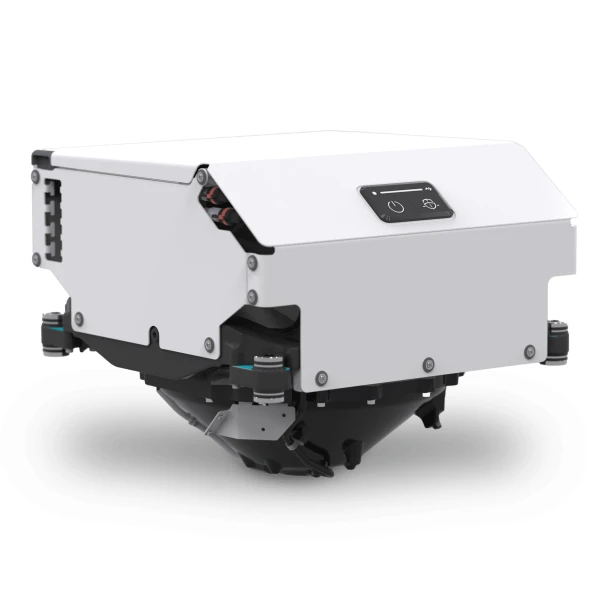
The DG3 can be started and controlled from the touchpad on its top cover or through a compatible multifunction display connected by Ethernet. The MFD interface can show roll angle, flywheel speed, operating signals, battery information and system faults. Compatible Garmin chartplotters can also display a compact gyro control overlay.
Current Dometic DG3 specifications
| Specification | Current reference value |
|---|---|
| Recommended boat range | 35 to 41 ft, subject to vessel displacement, structure, layout and Dometic approval |
| Operating speed | 4,700 rpm |
| Angular momentum | 3,000 N-m-s |
| Time to minimum stabilization | Approximately 9.5 minutes at 2,720 rpm |
| Time to full operating speed | Approximately 16.5 minutes at 4,700 rpm |
| Normal spin-down time | Approximately 16.5 minutes with regeneration |
| Operating power | Approximately 250 to 750 W, depending on sea state |
| Electrical compatibility | 12, 24 or 48 V vessel systems, with a dedicated 48 V gyro battery and application-specific installation hardware |
| Unit weight | 580 lb (263.04 kg) |
| Approximate envelope | 27.3 × 27.3 × 23 in (693.4 × 693.4 × 584.2 mm) |
| Dedicated 48 V battery size | 10.2 × 7.1 × 10.8 in (259.1 × 180.3 × 274.3 mm) |
| Raw-water supply | 2 to 6 gpm (7.57 to 22.71 L/min) |
| Operating temperature | 32 to 140 degrees F (0 to 60 degrees C) |
| Water ingress protection | IP67 |
| Published noise level | 72 dB at idle in the current installation manual |
| Published warranty | 3 years or 3,000 operating hours, subject to Dometic's current written warranty terms |
Specifications reviewed against Dometic product information and Rev. B installation documentation available in August 2026. Product specifications and installation requirements can change. The latest Dometic customer interface drawing and manuals control all final fitment and installation decisions.
Installation is a professional engineering project
The DG3 is not a do-it-yourself accessory. Dometic's current installation manual requires mechanical and electrical installation and setup by a qualified technician who has received Dometic training. A retrofit also requires structural engineering review by a third party, and Dometic recommends a vessel survey before installation.
- Access: The complete 580 lb unit and approved lifting equipment must be able to reach the mounting location safely.
- Position: The gyro must be installed aft of amidships, with the top touchpad facing forward or aft.
- Structure: The mounting foundation, fasteners and clearances must meet the latest Dometic interface drawing.
- Service space: The installation must preserve access for inspection, cooling-system service and future component replacement.
- Cooling: The raw-water system needs a seacock, strainer, pump, intake and overboard discharge sized and routed to Dometic requirements.
- Electrical: The vessel's house bank, charging system, circuit protection, dedicated 48 V battery and network connections must be engineered as one system.
- High-speed vessels: Dometic instructs installers to contact Dometic Engineering before specifying or installing the DG3 in a high-speed boat.
Dometic has promoted the DG3 as a drop-in replacement for some comparably sized gyro systems because it uses a similar footprint and reversible mounting feet. That description should not be treated as a direct bolt-in guarantee. Access, mounting-hole position, structure, cooling, wiring and service clearances still require a boat-specific review.
Industry recognition



- 2025 NMMA Innovation Award, Mechanical and Electrical Systems category, Miami International Boat Show
- 2025 DAME Design Award at METSTRADE in Amsterdam
- Finalist in Fast Company's 2025 Innovation by Design Awards, Transportation Design category
Frequently asked questions
Does the Dometic DG3 work at anchor?
Yes. The DG3 is designed to reduce roll while the boat is stationary as well as underway. The amount of improvement depends on the vessel, loading, installation location and sea conditions.
Will the DG3 completely stop boat movement or seasickness?
No gyro can eliminate every vessel motion or guarantee that no passenger will experience motion sickness. The DG3 is intended to reduce roll and improve comfort, not override the boat's design limits or make unsafe sea conditions safe.
Is the DG3 only for 35 to 41 foot boats?
Dometic developed the DG3 for the 35 to 41 foot market, but length alone does not determine fit. Displacement, roll characteristics, center of gravity, mounting location, structure, access and electrical capacity all affect selection. A Dometic dealer or installer must evaluate the actual vessel.
Is the DG3 maintenance-free?
Dometic describes the internal gyro design as virtually maintenance-free or service-free, particularly because it has no hydraulic precession system. The installed system still requires routine visual inspections, raw-water strainer cleaning, coolant checks and climate-specific winterizing or descaling. Follow the current operating manual and the installer's maintenance schedule.
Can the DG3 replace another gyro without major changes?
Possibly, but it should not be assumed. Dometic designed the footprint and reversible feet to help with replacement installations. A qualified installer must still verify the structure, hole pattern, clearances, access path, cooling circuit, electrical system and network compatibility.
Can I buy or have the DG3 installed through SeaTech Marine Products?
No. SeaTech Marine Products is not a DG3 dealer or installer. Use Dometic's dealer map to locate a qualified local source, and confirm directly that the dealer supports DG3 sales, installation and service.
Official Dometic resources
- Dometic DG3 product page
- Dometic DG3 product information and specifications (PDF)
- Dometic DG3 installation manual, Americas (PDF)
- Dometic DG3 operating manual, Americas (PDF)
Find a local Dometic DG3 dealer or installer
SeaTech Marine Products cannot quote, sell, install or service the DG3. Use Dometic's official locator and confirm DG3 capability with the selected location before arranging a vessel survey or installation consultation.
Additional Information
Can I install the DG3 in a boat I already own?: |
In most cases, yes. Certified installers will perform a vessel survey and consult with a naval architect to ensure your boat meets the necessary structural requirements. |
What size boats are compatible with the DG3?: |
The DG3 is designed for boats ranging from 35 to 41 feet. Additional requirements may apply. |
What happens if there’s an issue with the DG3?: |
The DG3 is built with safety as a priority. Its advanced software continuously monitors key parameters. If an issue arises, the system will alert you via the boat’s MFD (multifunction display) and initiate a spin-down process if necessary. |
Can the DG3 be repaired without removing it from the boat?: |
Repairs depend on the available workspace, but in most cases, yes. The DG3 is designed for easy component access and replacement. |
How much does it cost to service the DG3?: |
The DG3 was engineered to minimize long-term maintenance costs. It is maintenance-free for the product's lifespan, requiring only basic upkeep such as keeping the unit clean, free of debris, and performing routine visual inspections. |
What is a gyro stabilizer, and how does it work?: |
A gyro stabilizer reduces a boat’s rolling motion by spinning a heavy flywheel at high speeds. As the boat rolls, the gyro’s precession generates stabilizing forces, counteracting movement and enhancing onboard comfort. |
Why should I choose a gyro stabilizer over other stabilization options?: |
Gyro stabilizers offer several benefits: they don’t require external fins that can add drag or risk damage in shallow waters, they operate silently, and they are effective whether the boat is stationary or underway. |
Will a gyro stabilizer make a big difference in comfort?: |
Absolutely. A gyro stabilizer can reduce roll by over 90%, making time on the water more comfortable, especially in rough conditions or while at anchor. |
Does the DG3 consume a lot of power?: |
The DG3 is designed to be energy efficient. Power consumption depends on the operating conditions, but the system has been optimized to minimize its impact on your boat’s electrical system. |