

Description
BS-13 Control Reservoir with Charging Valve - Replaces R-13
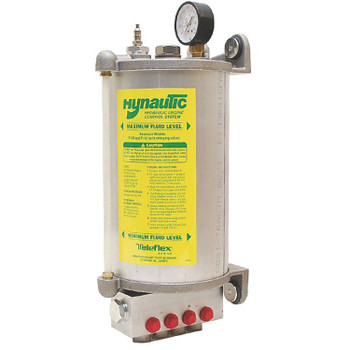
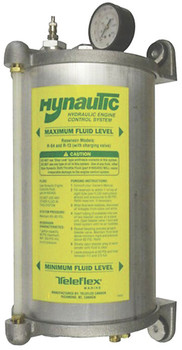
The BS13 control reservoir with charging valve is the replacement for the Hynautic R13 hydraulic engine control reservoir used to maintain extra fluid capacity and a constant pressure head for the system.
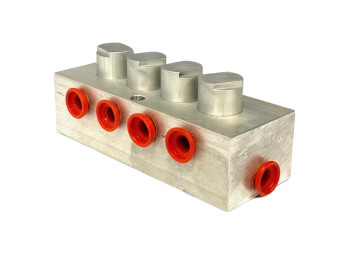
This vertical reservoir assembly is used in Hynautic hydraulic engine control systems where the charging valve regulates fluid flow at the bottom of the reservoir. The reservoir supports up to four stations, uses a visible sight glass and pressure gauge for routine checks, and helps compensate for fluid expansion and contraction as operating temperatures change.
Technical Specifications
The BS-13 follows the function of the original R-13 integrated reservoir by maintaining extra hydraulic fluid and a constant pressure head for the engine control system. Fluid flow to and from the reservoir is regulated by the charging valve below the tank, which helps keep the system under pressure while controlling expansion-related pressure changes.
Product Specifications
| Part Number | BS-13 |
|---|---|
| Replaces | Hynautic R-13 hydraulic engine control reservoir |
| Product Type | Hydraulic engine control reservoir with charging valve |
| Application | Hynautic hydraulic engine control systems |
| Pressure Head | 80 PSI nominal system pressure |
| Station Capacity | Up to 4 stations |
| Mounting Style | Vertical reservoir mounted to bulkhead, wall, or post |
| Visible Service Points | Pressure gauge, sight glass, air filler valve, fill port, and charging valve access |
| Manufacturer | Boat Steering Solutions LLC |
| Warranty | 1 year warranty from date of purchase |
Applications and Installation Notes
The BS-13 is used in Hynautic hydraulic engine control systems on pleasure craft, work boats, and commercial fishing boats where a pressurized control reservoir is required. It is intended for systems that originally used the R-13 style integrated reservoir with charging valve.
Install the reservoir in an accessible engine room location and keep it vertical with the pressure gauge on top. The sight glass should remain easy to read, and the operator should have access to the air filler valve, fill port, and charging valve. During routine checks, the fluid level should generally remain around one-half to two-thirds of the sight glass and reservoir pressure should typically stay in the 70 to 90 PSI range.